

Michael JW Green
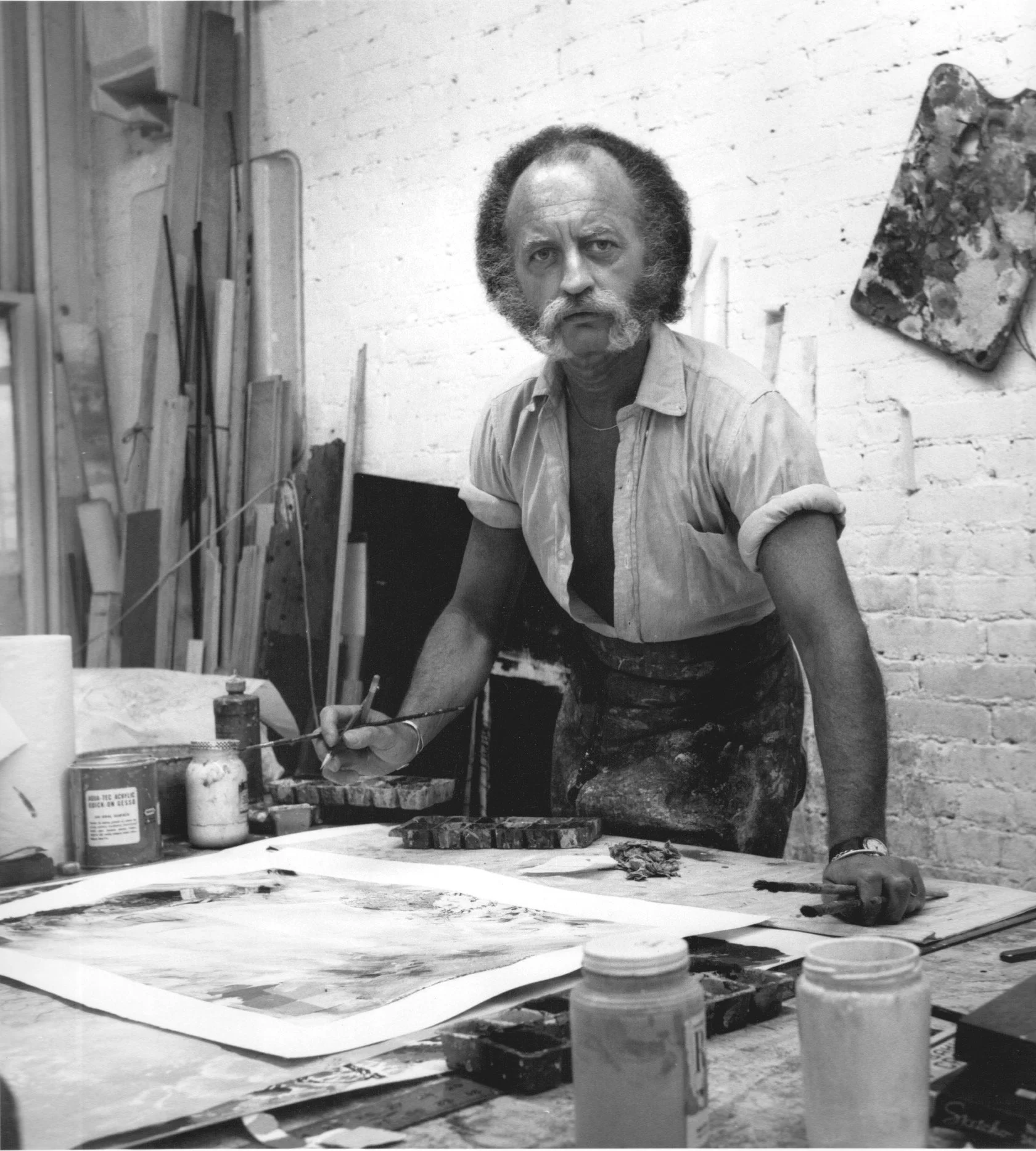
Michael JW Green in his SoHo studio, NY
Untamed by a conventional artistic education Michael Green’s works were widely exhibtited and sold in the USA, Italy and London. Here’s the remarkable story of his artistic life.
Sculptor and artist Michael John William Green (1929-2022) was born in Nyasaland, (now Malawi) where he spent the first seven years of his life before coming to England. He was educated in Taunton, Somerset and drew expressively from an early age.
Passionate about the theatre, he won a place at RADA at the age of 15 and went on to carve out a career as an actor before committing his life to art and design, initially working as a textile, product and theatre designer in Canada and New York.
In the 1960s he moved into his New York loft in SoHo Manhatten, as an early adopter of an unused industrial space with other artists, and here he developed his natural creative talent working through the diverse aspects of non-objective painting and developing his first extensive and expansive body of work: The Bridge Series, while crossing continents


Michael JW Green, 1977
Michael JW Green in his studio in Molini di Triora, Italy, 1990. Photo by Alex Brattell
Michael travelled widely across the globe, writing books and poetry as well as furthering his artistic skills, teaching colour theory in Atlanta, collecting rare books, studying mycology and immersing himself in abstract expressionism on a large scale.
He lived and worked between SoHo, New York and Italy where he helped to found the Villaggio Internazionale Artisiti, an artists’ cooperative based in the abandoned medieval village of Bussana Vecchia in Liguria. Finding the increasing commercialism of Bussana Vecchia stifling he found another derelict building and moved his life and work in Italy to Molini di Triora.
In 1986 Michael moved from SoHo Manhatten to the East End of London where he designed a further live/work studio in the old Spratt’s dog biscuit factory, a place that was finally big enough to accommodate his prolific artistic output and where he could develop his ‘found pieces’ 3-dimensional boxed art, collages and sculptures.
A committed environmentalist, Michael was an early member of the Green party and a fundraiser for gay rights charities.

Michael JW Green posing with Bridge Series #15, Hunnings Gallery, 1982
His work
Michael delved deeply into the human condition and psyche. He developed a unique approach to abstract expressionism, creating large canvases, captivating collages and ‘found pieces’ sculptures.
Untamed by conventional artistic education, his paintings, drawings, collages, sculptures and box art are a reflection of time, place and emotion, and were widely exhibited and collected during his lifetime with solo exhibitions in the US, Italy, London and Cyprus.
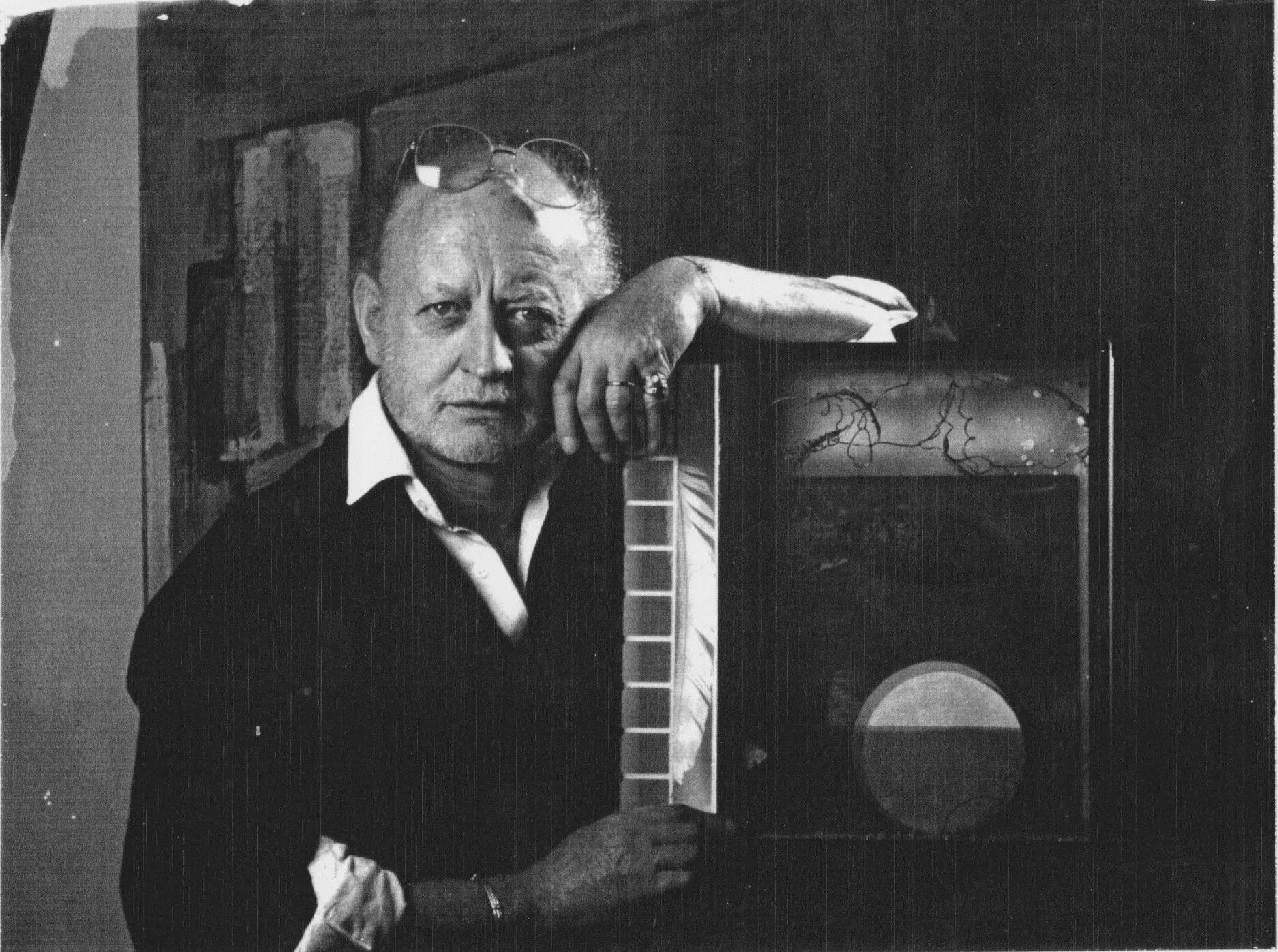
Michael JW Green, Limehouse, UK, 1988
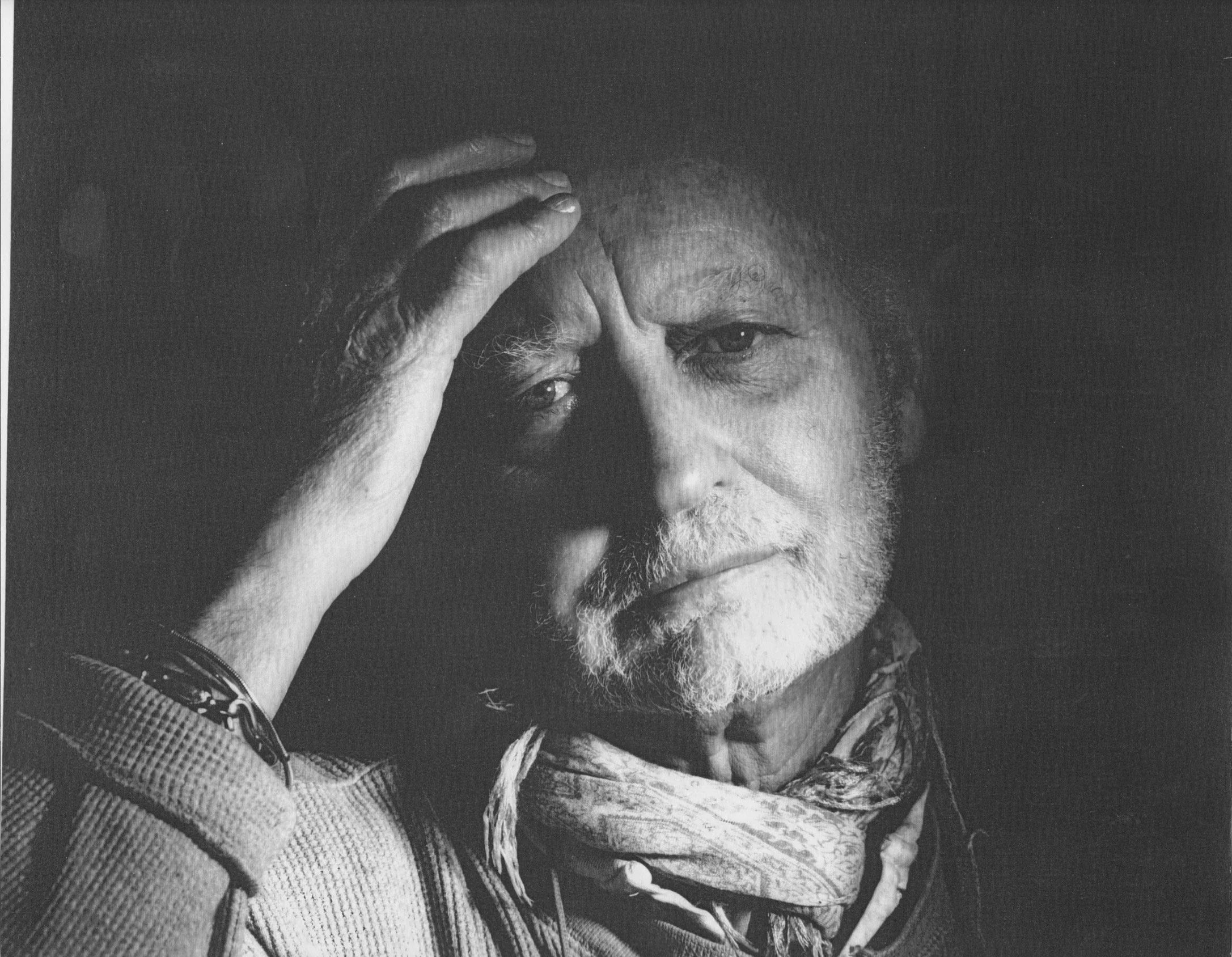
Michael JW Green, Limehouse, UK, 1990
Today
Since Michael Green’s death in London in October 2022 over 1,000 pieces of art have been discovered in his Limehouse studio, and in Molini di Triora Italy. Many of these pieces were created in New York and remained unpacked in the crates used for transporting his works from New York to London in the 1970s.
It was his wish that his remaining lifes work be made available to the public and used to create a lasting legacy for good.
"I must paint of the emotion of space, describe the charged nothingness"
MJWG, 1986 
Michael JW Green, Packing up NY, 1986. Photo by Jim Zver
Selected Chronology
1929 — Born in Zomba, Nyasaland
1945 — Enters RADA aged 15
1950s–60s — Theatre and design; moves to New York
1960s — Establishes studio in SoHo
1970s — Works between New York and Liguria; associated with Bussana Vecchia
1978 — Artist-in-residence / teaching at Indiana State University
1980s — Bridge Series exhibited in the United States
1986 — Moves from New York to Limehouse, London
1992 — Cyprus Works, Gallery Morfi, Limassol
1994 — Whitechapel Open / Open Studio participation
2001 — An Artist's Career, Rivington Gallery
2005 — The Chain of Time, Rivington Gallery
2022 — Dies in London
2026 — First posthumous exhibition, Green Gallery